Complex infrastructure projects are really cool. They are even cooler when they fundamentally change a community in the best possible way.
Right now, the Department of Local Services is halfway through building out the Fall City On-Site Septic system project that will fundamentally change the economy in this Snoqualmie Valley community.
Simply put, the state-of-the-art septic system means local businesses – which sit at the confluence of two pristine rivers – can safely flush more, wash more dishes and laundry, and put more material down the garbage disposal without worry. After decades of economic stagnation, businesses can expand in an environmentally safe and consistently reliable way.
How it works
We are installing 46 new septic systems and connections on each property. Those septic systems will take the personal solid waste from each property and convert it to liquid waste. The liquid waste is pumped to a state-of-the-art treatment plant near Bernard Park. The waste is received, cleaned, and cleaned again, then pumped into the drain field spread out under Bernard Park where it slowly returns to the earth.
Another bonus: When the project is complete, it will all be … invisible!
Check out these recent photos from the work below:
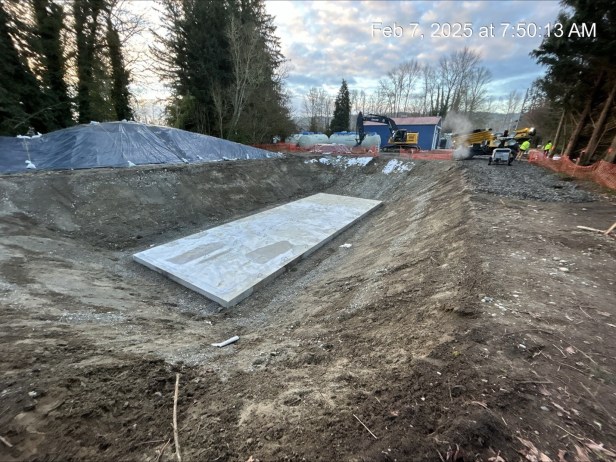
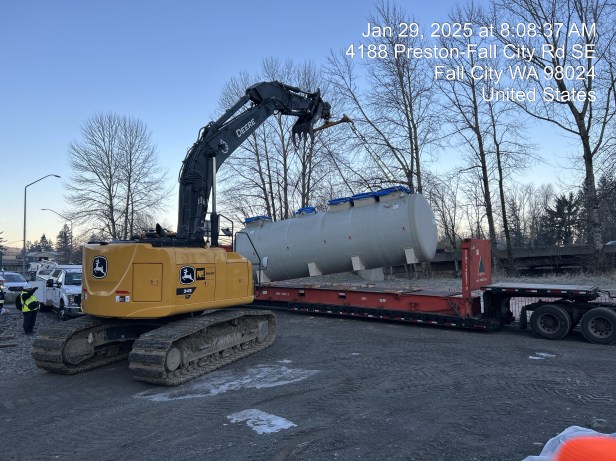
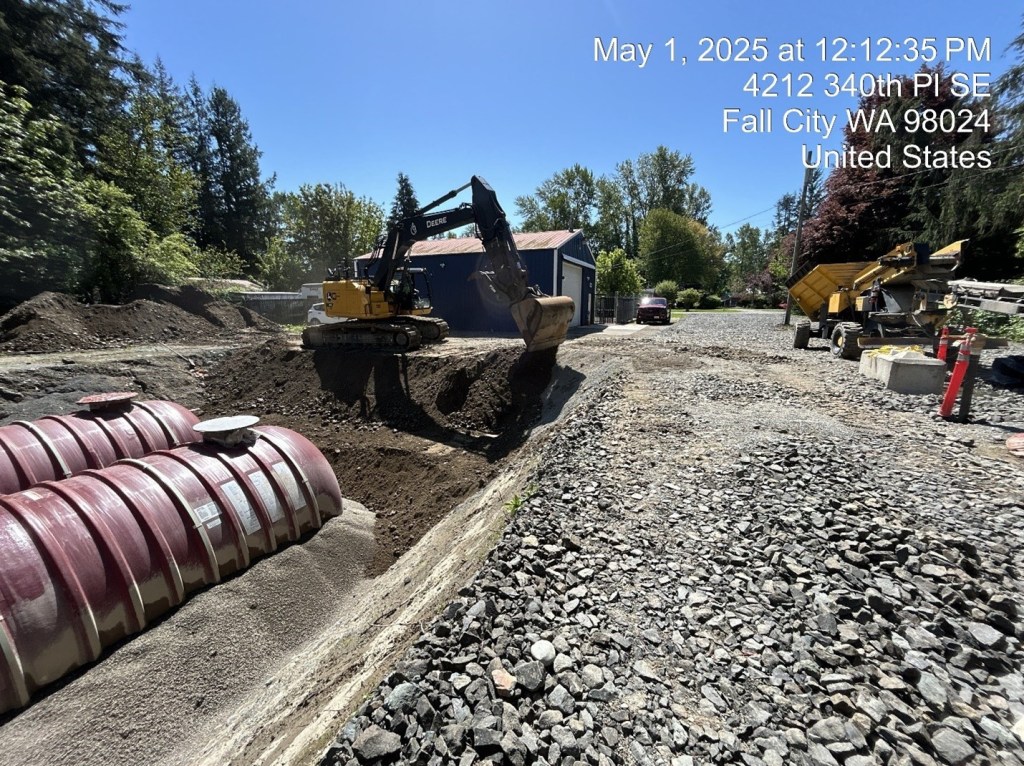
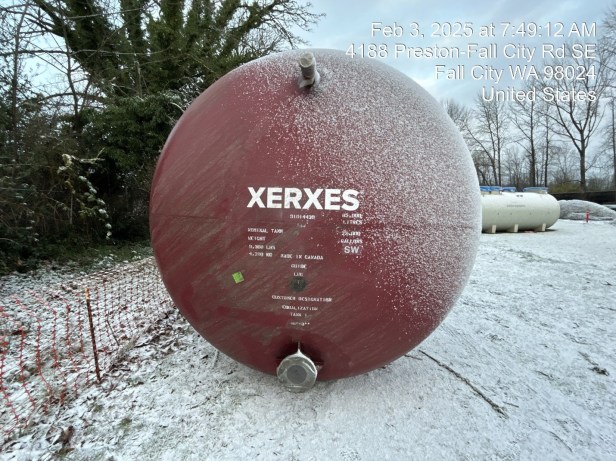
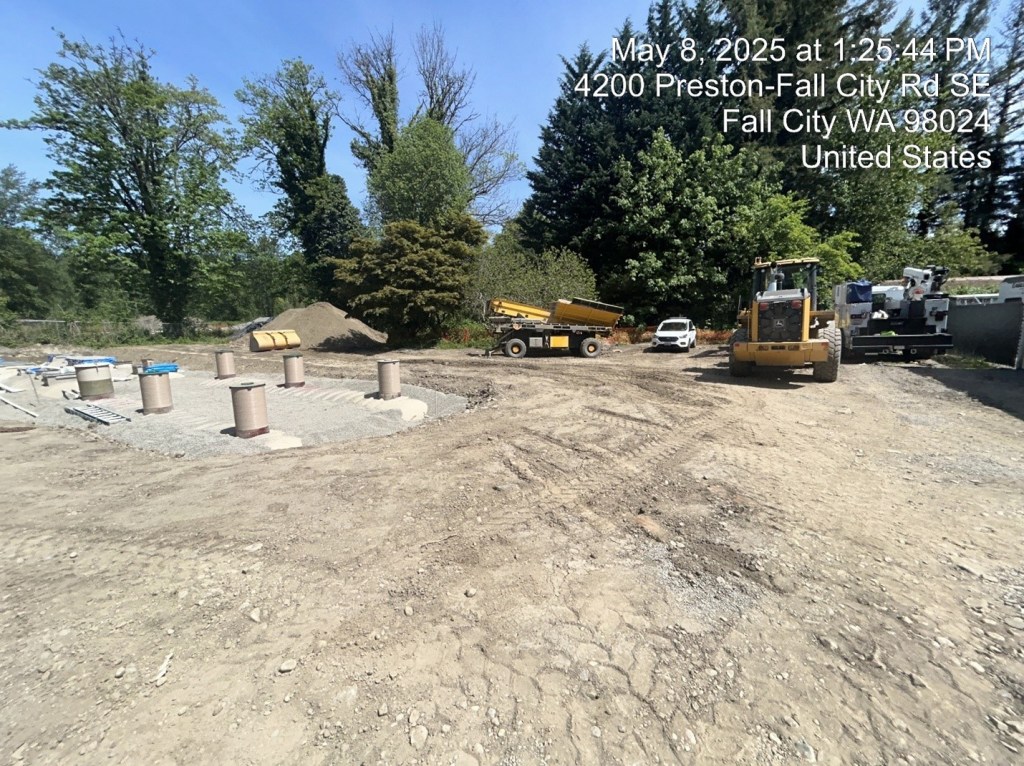
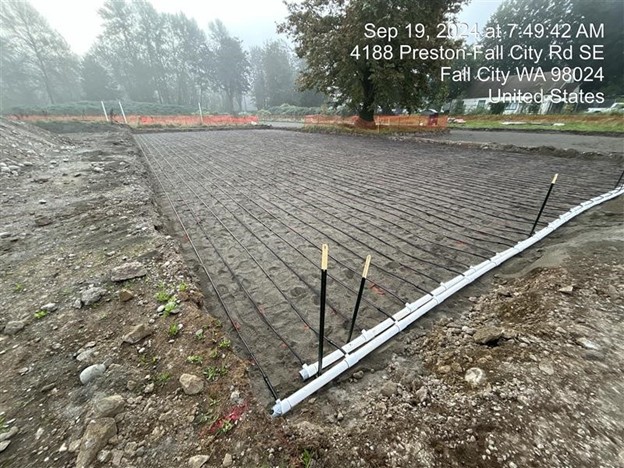
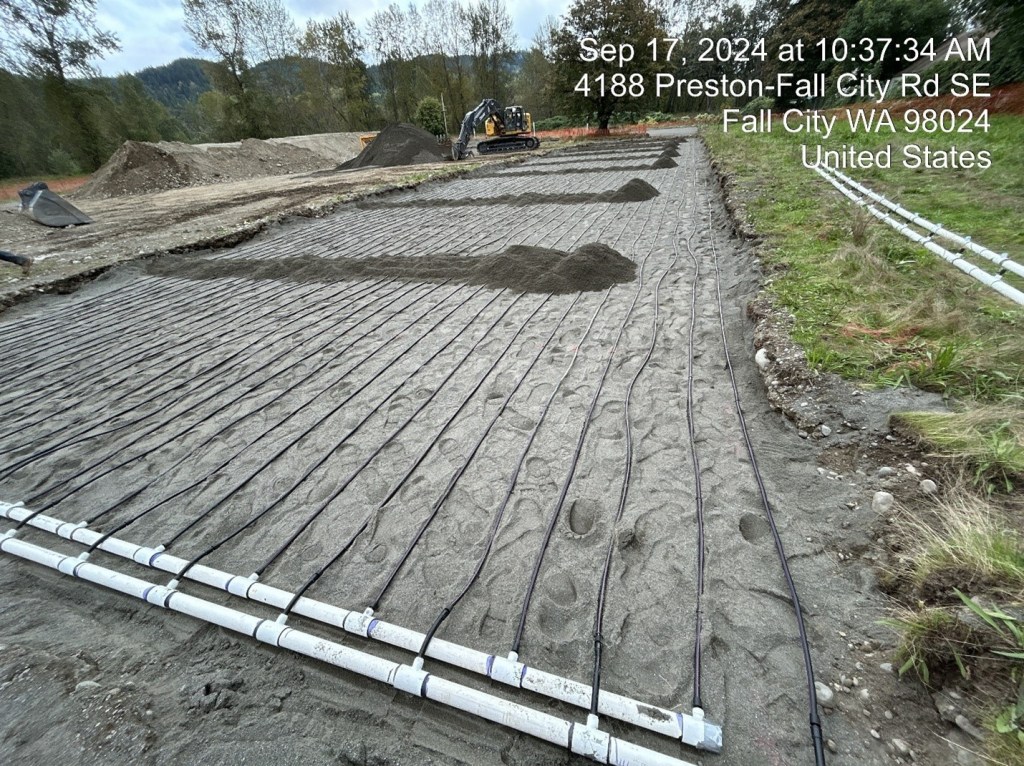
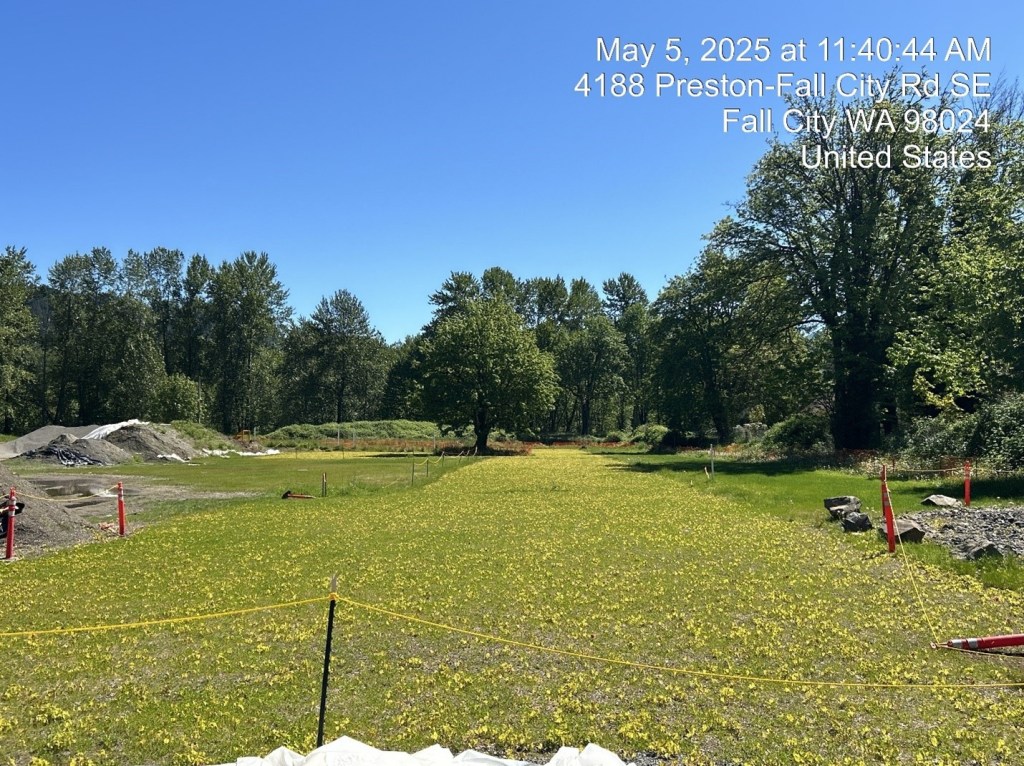
Over several weeks, crews set up forms, installed rebar and poured a concrete platform for the future treatment plant tanks (late Jan 2025).The concrete platform was completed by early February. Next up, the tanks. There are six tanks and each set of two serves a different purpose. The red tanks are 41 feet long. They receive the effluent from the individual septic tanks and hold about 23,000 gallons.The white tanks receive effluent from the red tanks and clean the wastewater. When the wastewater cleaning process is complete, the water is clean to the highest Washington State Department of Health standards. It’s so clean, you can drink it!The treatment tanks are secured to the ground with straps and steel embedded into the concrete. This ensures the tanks will not move in an earthquake or due to outside pressure. The fasteners run the length of all treatment tanks.Random fact: Did you know… Xerxes, the name of the company that builds these tanks, is a reference to Xerxes the Great, a Persian ruler who lived 518-465 BCE. He invaded Greece and failed. He returned home to Persia and dedicated himself to large infrastructure projects. He oversaw the completion of the Gate of All Nations, the Apadana and the Tachara at Persepolis, and continued the construction of the Palace of Darius at Susa. He also maintained the Royal Road built by his father. Clever people who came up with that name for these tanks. Now you know!Crews backfill the space around all the tanks with sand to make doubly sure the tanks won’t move.Now you see it, now you don’t! This is about all the public will see of the treatment system. It will be landscaped as well. Once the water is treated, it goes into the drain field under Bernard Park.This is the drain field. Crews dug down a few inches, put in a layer of sand and installed what functions as drip irrigation. Another layer of sand and landscaping material is on top.As the wastewater is cleaned, it is pumped into the drain field where it is slowly reabsorbed into the ground. There are five of these drainfield beds.This is what the public sees.
This project will be complete by June 2026. Thanks for letting us share how this all works. We think it’s pretty cool.
For more information, visit the Fall City On-Site project page here.





 King County Local