
Made Possible By Community: King County Local Services is checking in with some of those who received funding from the first Participatory Budgeting vote to see how that funding has helped. The program lets community members choose how government funds will be spent in their neighborhoods.
Funded project: Khmer community center in White Center area
Amount: $750,000
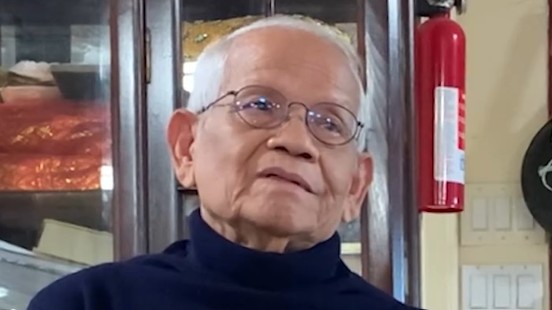
Moeun Kang fights back emotions when describing the horrors many in his home country endured during the Khmer Rouge regime in the mid-1970s and the Cambodian-Vietnamese War, which followed immediately afterward.
“We lost the population. Together, about two million Cambodians died—killed, died of starvation,” he recalls. “Those who wanted to escape got raped. Even educators … we tried to get out because we cannot live like that.”
During those years, hundreds of thousands Cambodian immigrants found asylum in the U.S., including in King County. Moeun was one of them. The now-retired Seattle Public Schools educator, who served as an instructional assistant, worked directly with the region’s newly settled community of people who are Khmer—the largest ethnic group in Cambodia. He heard directly from Khmer youths about the war zone their families had fled, as well as the obstacles they faced as immigrants in a new country an ocean away. These included social, language, and educational barriers as well as difficulty paying the bills.
Those relationships inspired Moeun, who today is an esteemed elder in the local community, to sow the seeds of a community center that would help Cambodian-American residents in King County and Washington State come together to heal. The center he envisioned would be a community hub for Khmer cultural preservation, education, and celebration.
“I want a place for people, old and young, to come together, to celebrate together and share,” said Moeun, who’s also founder and longtime president of the Sahak Khemararam Pothiram Buddhist Association.
Moeun and his fellow Khmer elders and community members have been planning the Cambodian-focused community center for nearly two decades. Most of the funds they’ve collected so far have come via donations from local Khmer residents. The added funding provided by the community through King County’s Participatory Budgeting program will help complete the center’s construction.
The 9,000-square-foot center will be built in traditional Khmer architectural style below a community Buddhist temple. It will feature a classroom, an events hall, a museum, a library, and a ceremony hall to serve the general public.
Barring any unforeseen scheduling issues, the center will open its doors to the public this year.
For Moeun, that day will mark a dream realized for generations of Cambodian-Americans.
He leans back in his chair and smiles. “I’m so happy for my people.”
 King County Local