
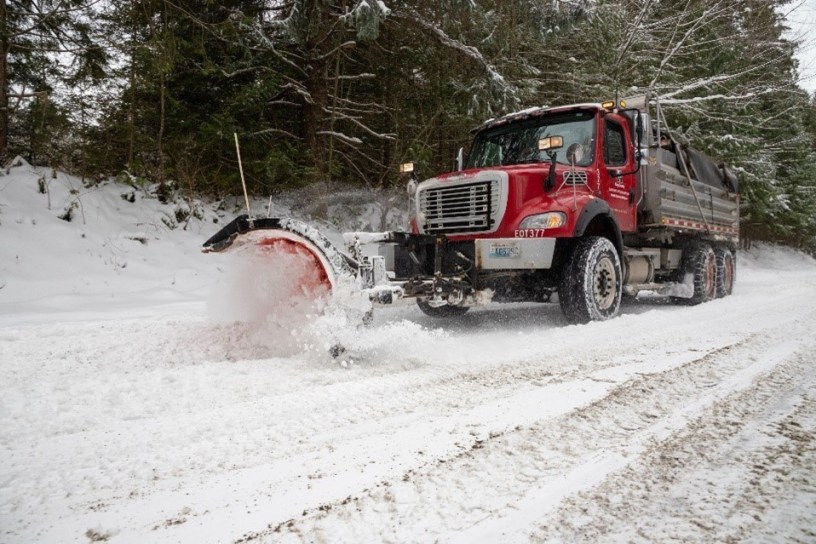
Kids might dream of a winter wonderland complete with a day off from school, snow angels and hot cocoa, but for our dedicated Road Services crews … they dream for something else this time of year.
Their wish lists consist of snow- and ice-free roads across hundreds of miles of unincorporated King County.
Before our “winter warriors” climb into the cabs of our big red snowplow trucks (see amazing picture) to face the challenges created by colder, wetter conditions, they first need to learn how it all works.
Thus begins (or began, really, a few months ago) with the season of winter weather training.
Earlier this fall, scores of newly hired Roads snowplow operators gathered with seasoned pros for a full day of intensive snow and ice training. The session featured hands-on practice behind the wheel of our 10-yard dump trucks outfitted with snowplow blades. Some employees have been plowing our roads for over 30 years, while for others, this is their first season.
Here is rundown of what this invaluable training and practice entailed:
- Plowing Proficiency: Our crews dove into hands-on training sessions on the proper techniques for attaching and operating plows. It’s an intricate dance that requires the steady eye of a truck driver and the steady hands of maintenance workers. With a focus on safety and efficiency, team members found their rhythm and honed their skills to ensure that they could push inches of snow to clear roads swiftly and effectively.
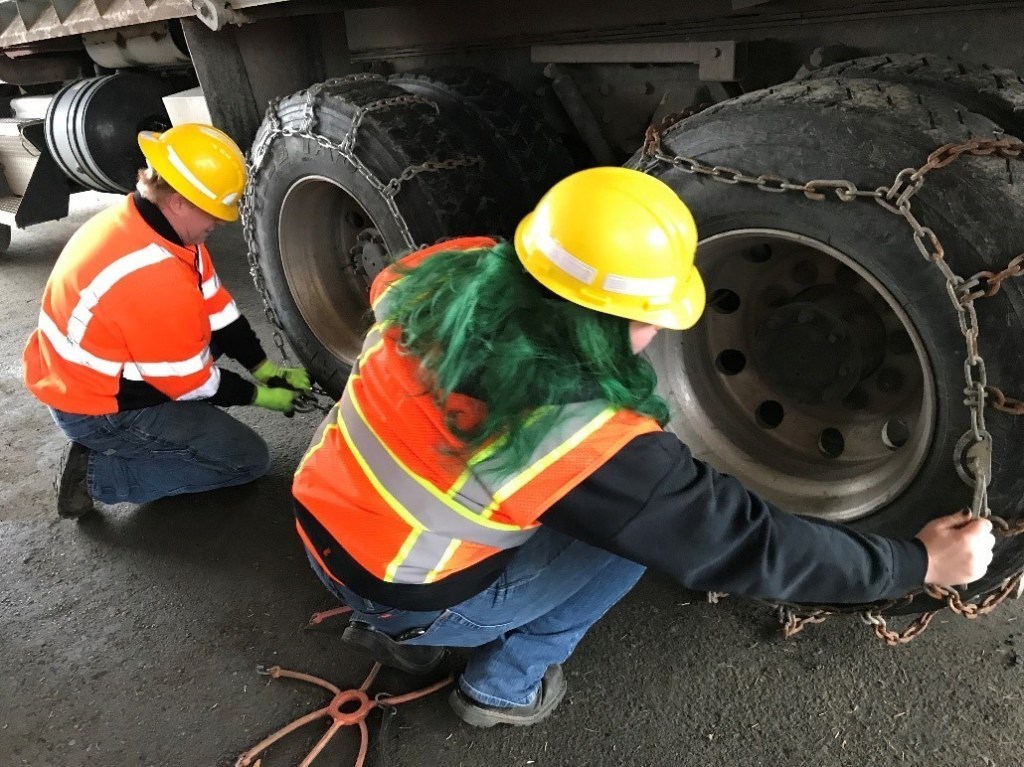
- Chains, chains, chains: When ice turns our roads into an ice rink, or a fresh blanket of snow covers what was once a two-lane road, it’s time to bring out the tire chains. Chains play a crucial role in maintaining traction and keeping our snowplows and trucks on the roads. The training included step-by-step guidance on selecting chains that are the right size and checking for defects. Crews then went through the repetitive process of installing and utilizing chains effectively. For example, if a chain breaks while on the job, our snow-and-ice squad members are ready (They keep a kit in their trucks to make repairs and adjustments)!
- Anti-Icer Application: It turns out you can’t apply anti-icer on a whim. Application, it turns out, requires a perfect recipe. Conditions must be bare and dry, and the outside temperature must be within a specific window. This proactive approach helps prevent the formation of ice on the road, making it easier to plow and ensuring safer road conditions for all. Here’s a fun fact: our anti-icer is a solution made of salt and bio-solids such as egg whites and beet juice (yum), which helps keep the roads free of cracks and potholes, and encourages the solution stick to the ground.
- Salt and Sand: Our teams made sure that we have mountains of salt and sand stockpiled and ready to be loaded into our trucks in a moment’s notice. They also verified the quickest and safest routes to our King County storage facilities. Just one of the final steps in putting this snow and ice routine together!
But wait, that’s not all! After spending time inspecting equipment, learning and practicing their winter weather response skills, our crews drove some of the 583 miles of snow routes on roads in unincorporated King County. The first roads that crews will clear of snow and ice are Category 1 and 2 designated roads, which are mostly major thoroughfares that ensure access to fire, police stations, and hospitals. Additional snow route categories capture smaller, more local routes that are incredibly steep, curvy, and have drop offs that can be difficult to maneuver in adverse conditions.
We try our best to keep our roads open and safe year-round, but we can’t be everywhere at once. We count on the help of our community to tell us when there is a problem. If you see a stop sign down, traffic signal out, a pothole, or any other problem, please contact us at our 24/7 Road Helpline at 206-477-8100.
Let’s have a safe winter, everyone!
 King County Local